
Why Socialization Looks Different in Homeschooling
Traditional school socialization is based on proximity: kids are grouped by age, placed in the same room daily, and told to “be social.” In homeschooling, social development happens through real-life interactions, not forced ones.
Homeschool socialization tends to be:
- multigenerational (kids learn to talk to all ages, not just peers)
- interest-based (children connect over shared passions)
- emotionally safer (less pressure, less comparison, fewer cliques)
- flexible (a mix of structured and spontaneous interactions)
- deeper and more intentional (friendships form through genuine compatibility)
Elementary-age homeschoolers especially thrive in mixed-age play because it mirrors natural human interaction through neighborhoods, cousins, family gatherings, playgrounds, and community spaces.
When kids aren’t confined to one group all day, they learn how to interact with lots of personalities and ages. This builds confidence, patience, emotional intelligence, and adaptability.
Homeschool research also shows that homeschooled children typically perform above average on social, emotional, and psychological development measures, including peer interaction and self‑concept.
How Homeschool Kids Make Friends in Real Life
Let’s look at where genuine friendships form naturally in homeschool life the same way they do in healthy communities.
1. Playground and Park Meetups
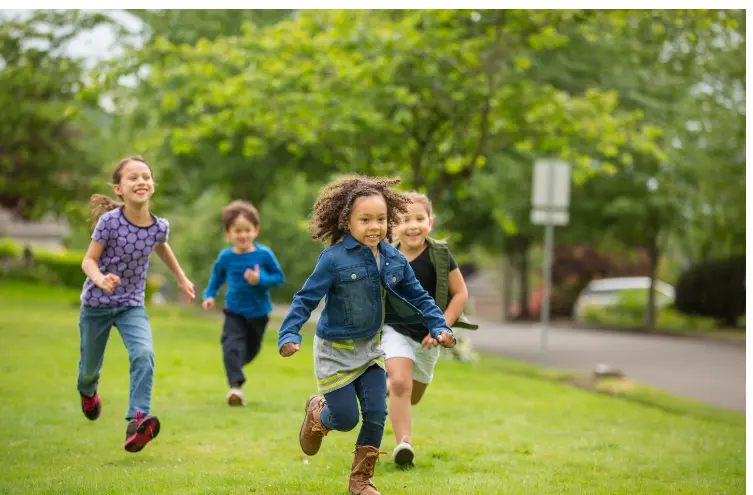
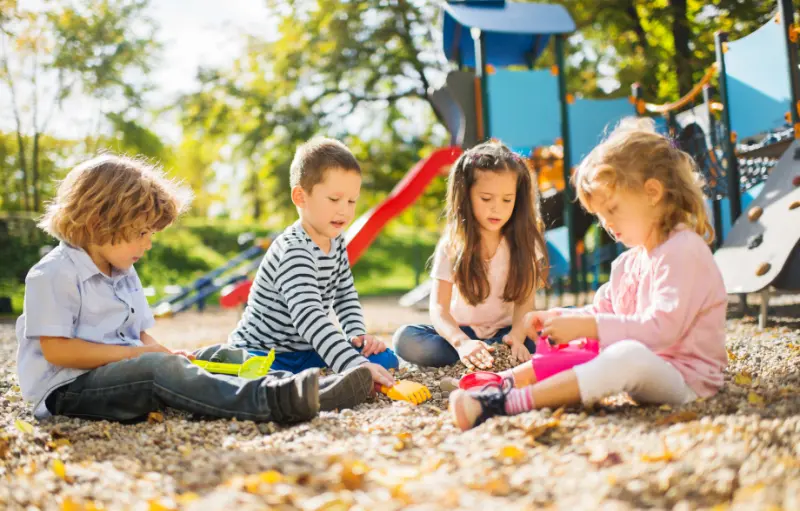
Parks are the social engine of homeschooling. Kids bond quickly here because play is open-ended and stress-free. There’s no assignment, no structure, no pressure, just imagination and movement.
The best part? Children who have space to initiate play develop strong social skills naturally. They learn negotiation, collaboration, turn-taking, and conflict resolution simply by being part of the group.
A simple weekly park day can create long-term friendships without you orchestrating everything.
2. Local Homeschool Groups
Most communities have active homeschool networks that host meetups, co-ops, field trips, book clubs, project fairs, and nature days. Many elementary-age friendships begin in these relaxed, shared-interest spaces.
These groups are powerful because they:
- bring like-minded families together
- create repeated contact (which is key for friendship formation)
- build mom community and child community simultaneously
If you’ve never joined one, look for groups on Facebook, local community centers, libraries, or through nearby homeschooling moms.
Your child doesn’t need dozens of friends, just two or three familiar faces they see consistently.
3. Extracurriculars (But Without Overloading Your Schedule)
Homeschool socialization often shines through extracurriculars because kids connect over shared passions. And they learn social skills naturally because they’re in environments they enjoy.
Great options for elementary-aged homeschoolers:
- dance
- gymnastics
- art classes
- swimming
- music lessons
- martial arts
- beginner sports
- nature clubs
- Lego robotics (you’d be surprised at how well little ones collaborate)
Children bond quicker when they’re doing something they love, not something forced.
Remember: one or two activities per week is more than enough.
4. Neighborhood Friendships
A huge advantage of homeschooling is availability: your child can play after school hours and during quieter times when the neighborhood isn’t crowded.
If your child has neighborhood friends, treasure those relationships. They’re simple, spontaneous, and often the longest-lasting.
Even basic activities like:
- bike rides
- chalk drawing
- backyard games
- sidewalk “store” setups
- scavenger hunts
…build strong friendships and resilience.
Looking for simple, screen-free ways to meet other homeschool families?
Check out: Screen-Free Homeschool Activities That Keep Kids Engaged
Or explore this nature-inspired social guide:
5. Family, Cousins, and Community Members
The assumption that children can only bond with same-age peers is a modern idea. Historically, kids learned social behavior from older kids, younger kids, adults, and siblings.
Elementary homeschoolers benefit deeply from:
- cousins
- church friends
- neighbors
- playdates with family friends
- community gatherings
- multi-age co-ops
These relationships teach empathy, confidence, and adaptability.
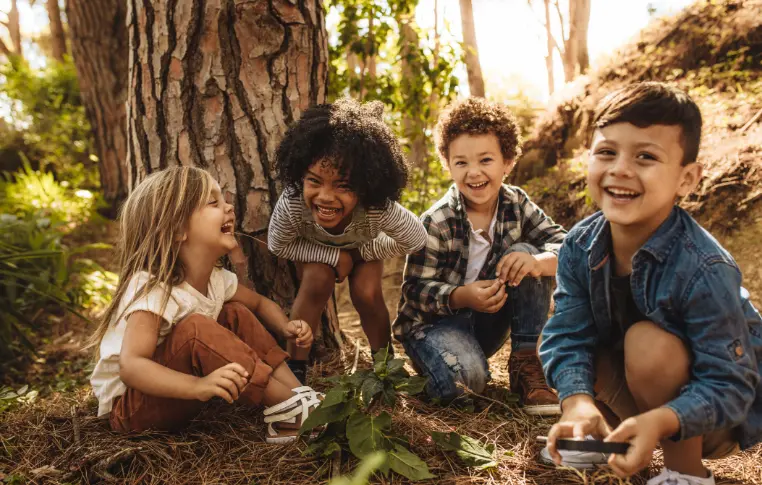
6. Nature-Based Meetups
If your family loves outdoor learning, nature-based groups are a goldmine for friendships. Children bond quickly when they’re exploring, climbing, discovering, or simply sharing space in nature. Nature groups are especially supportive for: shy kids, sensory-sensitive kids, high-energy kids, hands-on learners. If you read Outdoor Homeschooling: Turning Nature Into Your Classroom, you’ll find more ways to blend nature and social development. Nature offers social opportunities without loud, overstimulating indoor environments.
How to Support Social Confidence in Elementary Homeschoolers
You don’t need to be a social expert or host weekly meetups. Simply being aware and supportive makes a huge difference.
1. Model Friendly Social Behavior
Kids copy what they see. When they watch you:
- greet others warmly
- ask simple questions
- show kindness
- share space comfortably
…they absorb those skills naturally.
2. Create Predictable Social Opportunities
Friendships grow through repetition, not one-off interactions.
A simple rhythm like:
- Monday library
- Wednesday park
- Friday enrichment class
…creates social consistency without overwhelming you.
This also helps children anticipate and prepare for social time, great for shy kids or kids who need routine.
3. Teach Conversation and Play Skills Gently
Young kids often need support understanding:
- how to introduce themselves
- how to ask to join a game
- how to share or take turns
- how to handle rejection
- how to problem-solve disagreements
This doesn’t require scripts, just small, real-life practice.
Practice through:
- role-playing (“Let’s pretend you want to join a game… what could you say?”)
- modeling during playdates
- gentle reminders at the park
These skills stick quickly and grow confidence over time.
4. Avoid Over-Scheduling Kids Need Down Time Too
Some parents try to compensate for “socialization worries” by stacking activity after activity.
But children build deep friendships during slow, unstructured time not while rushing between commitments.
A calm weekly rhythm supports emotional well-being and stronger relationships.
(If you’re feeling stretched thin lately, Homeschool Burnout for Moms has helpful ways to protect your energy.)
5. Embrace Personality Differences
Not every child wants a big friend circle. Some prefer one close friend. Some are social butterflies. Some need warm-up time. Some make friends instantly.
Your child’s social needs are valid whatever they look like.
Your goal isn’t to force extroversion but to support healthy, confident connection.

What If Your Child Is Shy or Slow to Warm Up?
Many elementary homeschoolers are shy both in school and at home. You’re not doing anything wrong.
Gentle ways to help shy kids socialize:
- arrive early so the environment is calm before crowds arrive
- encourage one-on-one playdates before big group settings
- support familiar routines
- choose quieter social settings (nature groups, small co-ops, libraries)
- avoid pushing them to perform socially
- celebrate small victories (“You said hi today that was brave!”)
Friendships take time. Slow is not wrong.
What Healthy Homeschool Socialization Actually Looks Like
Real socialization isn’t loud, chaotic group activity. It’s not forced interaction. It’s not “talk to five kids or you’ll never learn social skills.” Real socialization is: kindness, empathy, confidence, communication, cooperation, sharing, working through disagreements, learning to navigate different personalities. These skills happen beautifully in homeschooling because children learn them through real-life interactions, not artificial classroom environments.
The Truth: Homeschool Kids Are Socialized Just Differently
Homeschoolers grow into well-rounded, emotionally intelligent adults because they’ve spent their childhood in diverse social environments, not just one age-grouped classroom.
They interact with: younger kids, older kids, adults, teens, neighbors, coaches, librarians, family friends which builds confidence and adaptability.
Homeschool socialization isn’t a weakness, it’s a strength.
Conclusion
Your elementary homeschooler doesn’t need a traditional classroom to develop strong social skills or form meaningful friendships. Socialization happens everywhere at parks, in nature, through extracurriculars, through families, and through simple everyday experiences.
What your child really needs is not a crowd, but connection. Not forced interaction, but natural relationships. Not pressure, but presence.
The beauty of homeschooling is that you can create a social life that fits your child, not one that forces them into molds they don’t belong to. Whether your child makes friends slowly or instantly, whether they love big groups or quiet one-on-one interactions, homeschooling gives them room to grow in ways that feel emotionally safe and authentic.
Your child is not missing out. They’re growing up in a world where real-life socialization is everywhere and they’re learning to navigate it with confidence, curiosity, and heart.