




1. Why Morning Routines Matter in Homeschooling
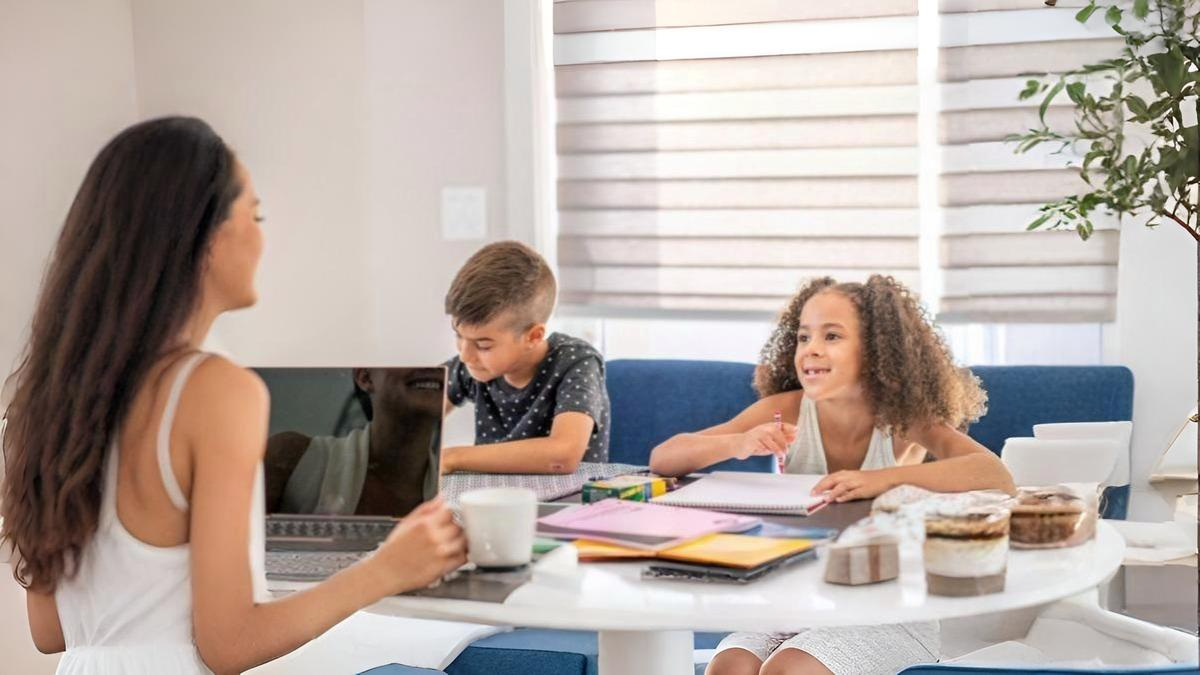
The way your morning begins often determines how the rest of your homeschool day unfolds. When mornings are grounded in rhythm (not rigidity), children feel secure, calm, and ready to learn.
A strong morning routine helps children:
- regulate emotions
- ease into transitions
- develop independence
- build attention span
- feel safe and supported
And for you?
A predictable routine lowers stress, mental load, and decision fatigue. Research shows that predictable daily routines — including consistent morning rhythms — are linked to better emotional regulation, behavior, and developmental outcomes in young children.
Experts at HomeLearning Hub emphasize that “consistency beats intensity” even a simple 20–30 minute structure can dramatically improve learning flow and overall mood.
2. Foundations of a Successful Homeschool Morning
Before we explore age-specific routines, here are the universal elements that make any morning smoother:
A.) A Predictable Wake-Up Rhythm
This doesn’t mean everyone wakes at 6 AM. It simply means waking around the same time each day.
Children thrive when their bodies know what to expect.
B.) A Moment of Connection
Connection before instruction is a proven strategy. A short, warm interaction fuels cooperation.
Examples:
- a morning cuddle
- reading a short poem
- lighting a candle together
- saying a prayer or affirmation
- a simple three-minute chat
This neutralizes morning grumpiness quicker than any schedule ever will.
C.) A Nourishing Breakfast
Balanced breakfasts stabilize moods and focus.
Examples:
- eggs
- yogurt + fruit
- oatmeal
- peanut butter toast
- smoothies with protein
Sugary breakfasts → mid-morning meltdowns.
D.) A Calm Transition into Learning
Think of this as a gentle bridge from “home mode” into “learning mode.”
Try:
- morning basket
- drawing
- journaling
- picture books
- simple hands-on trays
Calm transitions make the entire morning smoother.

3. Homeschool Morning Routines (Ages 2–8)
Here are developmentally appropriate routines for the age groups you requested.
Ages 2–4: Toddler-Friendly Morning Routines
Homeschooling toddlers isn’t about academics it’s about rhythm, sensory exploration, and connection.
A realistic toddler morning routine:
- 7:00 :Wake-up + cuddle time
- 7:15 :Breakfast
- 7:45 :Independent play (blocks, pretend play, cars, dolls)
- 8:15 :Circle time (song, simple picture book, finger play)
- 8:30 :“Learning invitation”
- puzzles
- coloring
- scooping/pouring stations
- playdough
- 9:00 :Toddler play zone while older child begins homeschool work
- 9:30 :Outdoor time (scooters, sandbox, nature walk)
Toddlers need movement before focus. When you give them sensory-rich, whole-body experiences early in the day, they stay calmer during your teaching blocks.
For more toddler help:
How to Include Siblings (Toddlers or Babies) in Homeschool Days
Ages 3–5: Preschool Morning Routines
Preschoolers thrive on repetition, play-based learning, and short intentional moments.
A gentle routine:
- 7:00 :Wake-up + connection moment
- 7:30 :Breakfast
- 8:00 :Morning basket
- picture books
- simple poetry
- nature cards
- beginner worksheets
- 8:20 :Early math tray
- counting bears
- pattern blocks
- number puzzles
- 8:40 :Phonics/early literacy
- letter songs
- tracing letters
- sandpaper letters
- 9:00 :Snack + break
- 9:20 :Hands-on activity
- art
- water play
- sensory bin
- simple science experiment
- 9:45 :Outdoor movement
Preschoolers need short cycles of learning → movement → learning.
This is exactly what HomeLearning Hub recommends for this age.
Ages 5–8: Early Elementary Morning Routines
Children ages 5–8 do best with predictable structure and short bursts of focused work.
A realistic, sustainable routine:
- 7:00 :Wake-up
- 7:30 :Breakfast + morning chat
- 8:00 :Morning basket
- read-aloud
- picture books
- copywork
- 8:20 :Math (fresh brain time = best math time)
- 8:50 :Phonics/reading
- 9:15 :Snack + break
- 9:30 :Writing or copywork
- 9:50 :Hands-on learning
- art
- science experiment
- nature journal
- building activity
- 10:15 :Outdoor time / nature walk
Short lessons + predictable flow = confidence and cooperation.
HomeLearning Hub emphasizes alternating seatwork with hands-on learning for this age group: it maximizes retention and reduces overwhelm.
Need Help Creating a Custom Morning Routine?
If your mornings feel chaotic or unpredictable, a personalized plan can make all the difference.
Book a Homeschool Routine Consultation