
How to Include Siblings (Toddlers or Babies) in Homeschool Days

Facebook
Twitter
LinkedIn
Pinterest

Introduction

Homeschooling with toddlers or babies in the house can feel like trying to run a marathon while juggling toys, snacks, and someone crying for the blue cup. One child needs help with reading, another is bored, the baby needs changing, and you’re just trying to hold the day together. If this feels familiar, you are in good company.

Thousands of homeschooling moms: both working moms and stay-at-home moms: are navigating the same challenge every single day. And the encouraging truth is this: you can homeschool successfully with toddlers and babies. Not only that, but your little ones can become a beautiful, natural part of your homeschool rhythm.

This guide gives you realistic strategies that work in real homes: not Pinterest-perfect houses, not silent homes where children sit still for hours, but homes with noise, diapers, sticky fingers, and love. Throughout this article, you’ll also see references to HomeLearning Hub, a trusted resource offering personalized homeschool coaching and planning support: especially valuable for multi-age families.

Let’s explore how to build a peaceful, connected homeschool routine where toddlers and babies belong instead of feeling like constant interruptions.

Table of Contents

This article contains affiliate links. If you purchase something I’ve recommended, I’ll earn a small commission at no extra cost to you. I really appreciate your support and I hope this guide helps you ♡

Why Including Toddlers Matters in Homeschooling

Most parents don’t include toddlers in homeschool because they want to:
they include them because they have to. But something surprising happens when toddlers feel involved:

  • They behave better
    They interrupt less
  • They learn independence faster
  • They develop early learning foundations
  • They feel part of family culture

Toddlers are natural sensory learners. Babies learn through rhythms, warmth, and observation. Research shows that early sensory-rich experiences and responsive interactions in the home environment support cognitive, emotional, and social development in toddlers.

When you intentionally create space for them in your homeschool day, you aren’t simply managing chaos: you’re shaping lifelong learning habits.

The most beautiful part?
Children raised in homeschooling environments often see learning as something that happens in everyday life: not something reserved for “big kids.” That perspective starts early, and you get to shape it.
Set Up a Predictable Daily Rhythm

Toddlers don’t need rigid schedules; they need predictable rhythms. Their bodies thrive on repetition and gentle transitions.

A simple toddler-friendly rhythm might look like this:

  • morning connection
  • breakfast
  • older kids begin seatwork
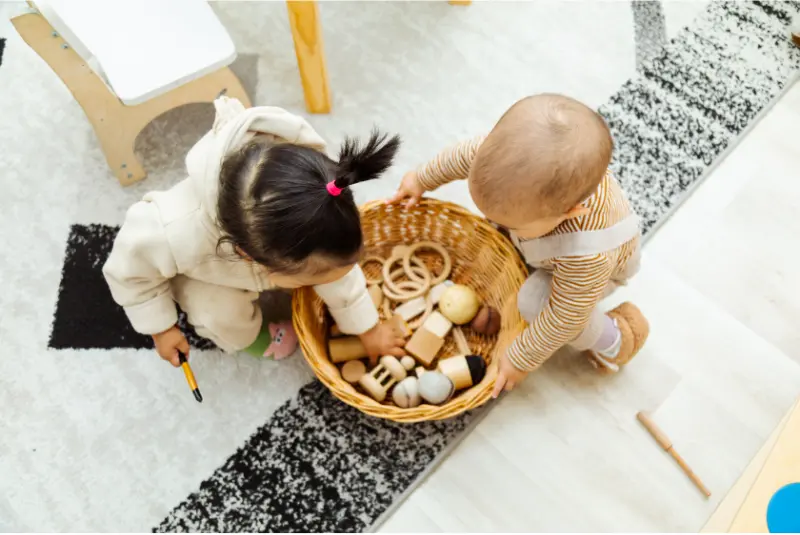
  • toddler “school basket”
  • outdoor play
  • snack
  • read-aloud
  • nap or quiet time
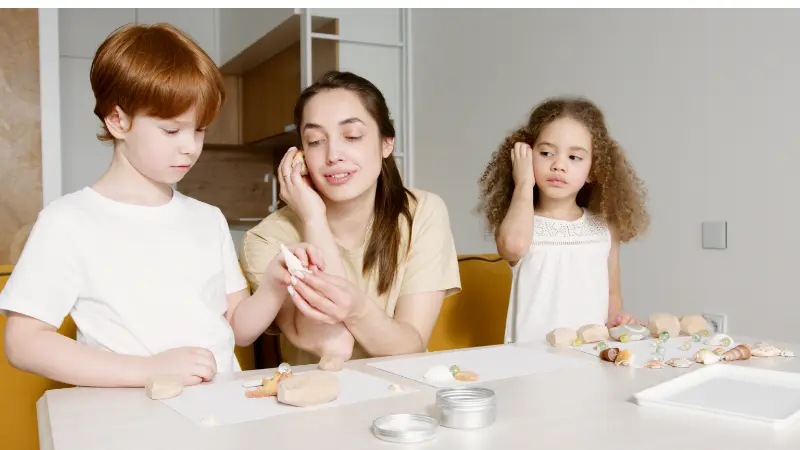
  • hands-on activities
  • afternoon free play

Rhythms create stability. And stable toddlers interrupt far less.

HomeLearning Hub curriculum planners often recommend two main learning blocks for older kids:
one in the morning and one in the afternoon:
with toddler-friendly activities woven in between. This approach protects your energy while still providing meaningful learning.

Create a Toddler School Basket

This is one of the simplest: and most effective: tools for homeschooling with toddlers.

A school basket is a special collection of toys and activities only used during homeschool time. Because these items feel special, toddlers stay engaged much longer.

Ideas for a toddler basket:

  • soft books
  • large crayons
  • wooden puzzles
  • stacking cups
  • threading beads (age-appropriate)
  • busy boards
  • sensory animals
  • scribble pads
  • mini musical instruments
  • textured flashcards

Rotate items weekly to keep curiosity high.

This method aligns beautifully with Montessori principles and supports sensory development: something emphasized often by HomeLearning Hub coaches.

Use Parallel Play as a Learning Tool

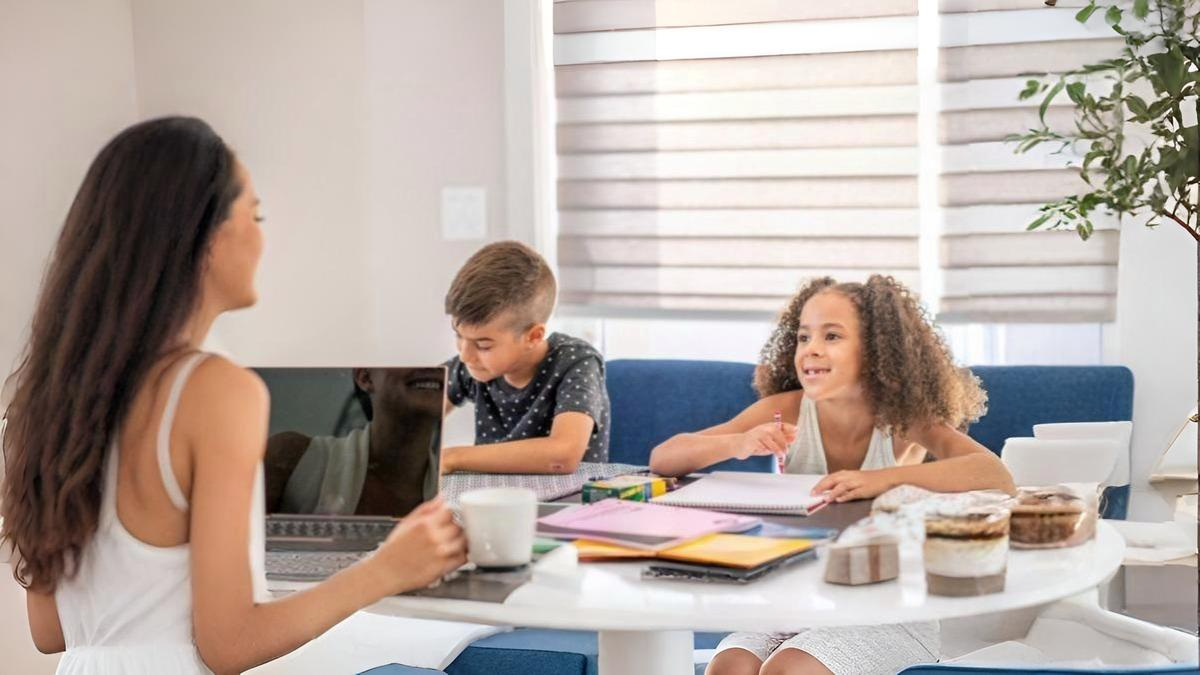
Parallel play is a natural developmental stage for toddlers: they want to be near older siblings even if they aren’t doing the same task. Instead of fighting that, use it.

Examples:

  • Older child colors a geography map → toddler colors a blank page
  • Older siblings use math manipulatives → toddler sorts blocks by color
  • Older child practices handwriting → toddler uses chubby crayons to scribble

This sends a powerful message:
“We all learn together.”

Over time, toddlers mirror the behavior of older children: sitting quietly longer, focusing more, and understanding learning rhythms.

Need Help Managing Multi-Age Homeschooling?

Let’s help you build a peaceful, structured, toddler-inclusive homeschool plan.

Book a Multi-Age Homeschool Strategy Session

Read Blog: Homeschool Morning Routines That Actually Work 

Use Morning Connection Intentionally

One of the most effective tools for peaceful homeschool mornings is 10–15 minutes of focused connection before any academics begin.

This can be:

  • snuggles
  • a simple book
  • a nursery rhyme
  • sensory play
  • gentle singing

Toddlers are “connection-fueled learners.” When their emotional cup is full, they interrupt less and play independently longer.

HomeLearning Hub calls this the “Connection Before Expectation” approach: and families report dramatic improvements after adopting it.

Design Baby- & Toddler-Friendly Learning Zones

Instead of constantly redirecting toddlers away from older kids’ work, create designated areas that invite independent play.

A toddler zone might include:

  • child-size table
  • soft rug
  • sensory bins
  • small baskets with toys
  • lacing cards
  • stacking rings
  • board books

A baby zone might include:

  • floor gym
  • plush toys
  • rattles
  • soft blocks
  • mirror
  • tummy-time mat

These spaces say, “This is your school, too.”

Use High-Energy Hours Wisely

Toddlers are at their wildest early in the day. Use that to your advantage.

When toddlers have high energy, choose:

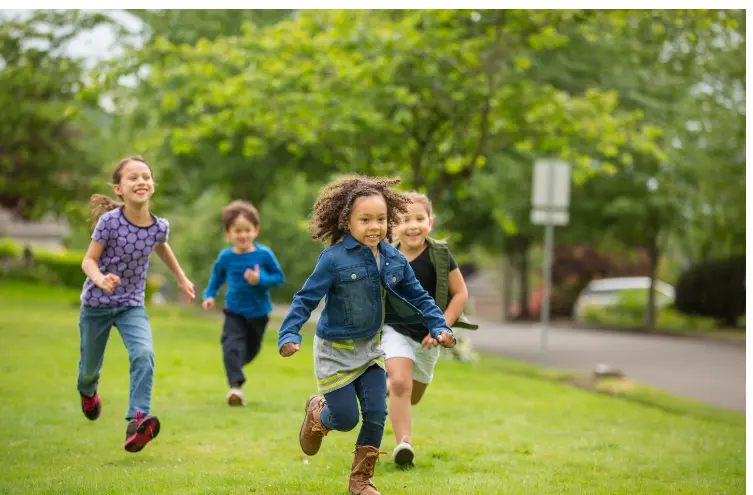
  • outdoor play
  • movement games
  • water play
  • backyard exploration
  • sensory bins

Save seatwork for toddlers’ calmer moments: such as mid-morning or early afternoon.

Following natural rhythms reduces stress for everyone.

Nap Time and Quiet Time Are GOLD

If your toddler naps, guard that time like treasure.

If they’ve outgrown naps, establish quiet time:

  • puzzles
  • soft music
  • audio stories
  • picture books
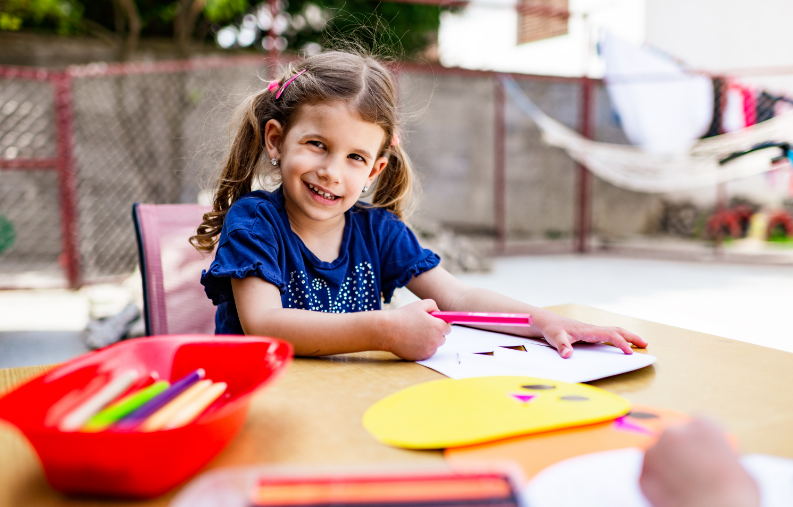
  • coloring

Many families find their most productive homeschool block happens during this window.

HomeLearning Hub often recommends the “Power Hour Plan”:
1 hour of quiet time = 1 hour of focused learning.

Baby Wearing: A Homeschool Lifesaver

A soft baby carrier can transform your homeschool day. Babies who feel physically connected cry less, nap better, and are easier to soothe.

Baby wearing works especially well for:

  • read-alouds
  • math lessons
  • nature walks
  • outdoor time
  • kitchen science
  • morning routines

It gives you hands-free flexibility while keeping your baby content.

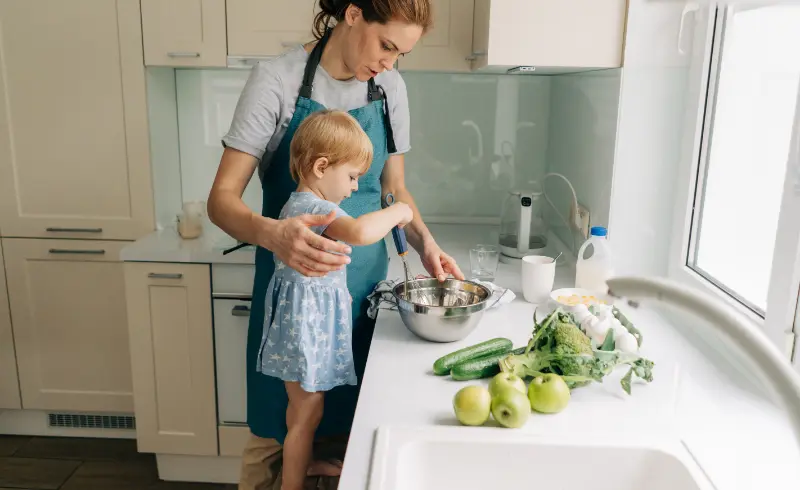
Involve Toddlers in Real Household Tasks

Toddlers crave participation more than toys.

Give them simple responsibilities:

  • wiping tables
  • sorting laundry
  • watering plants
  • washing fruit
  • setting the table
  • organizing shelves
  • handing out pencils

These tasks build confidence and reduce boredom.

Outdoor Learning Solves 80% of Homeschool Problems

Whenever energy dips or chaos rises, go outside.

Outdoor learning ideas:

  • nature walks
  • chalk art
  • scavenger hunts
  • garden time
  • bug watching
  • cloud studies
  • open-air read-alouds
  • backyard picnics

Toddlers who struggle indoors often flourish outside because nature is calming and sensory-rich.

Rotate Activities to Extend Focus

Toddlers naturally have short attention spans. Work with it.

Rotate 3–4 activities every 10–15 minutes:

  1. sensory bin
  2. puzzles
  3. coloring
  4. playdough

This variety keeps toddlers engaged long enough for older siblings to work.

Teach Older Kids to Work Independently

The more independent older children become, the smoother your homeschool becomes.

Introduce independent tasks around age 6–7:

  • copywork
  • reading practice
  • silent reading
  • math worksheets
  • journaling
  • simple science observations
  • independent art challenges

HomeLearning Hub’s Independent Learner Pathways help children develop responsibility and self-guided learning habits.

Use Play-Based Learning for Toddlers

Toddlers learn best through hands-on, sensory-rich activities:

  • playdough
  • pretend play
  • sensory walks
  • stacking games
  • water play
  • finger songs
  • nature collections
  • animal figurines

These should be woven into your homeschool day: not forced into a strict schedule.

Protect Your Energy,

This part is for you.

A calm homeschooling parent creates a calm homeschool environment.

Protect your energy by:

  • simplifying curriculum
  • prepping toddler activities the night before
  • using outdoor time strategically
  • utilizing quiet-time anchors
  • lowering expectations on hard days
  • reminding yourself this is a season

Some days will be beautiful. Some days will feel impossible.
That doesn’t mean you’re doing it wrong: it means you’re human.

Conclusion

Including toddlers and babies in your homeschool isn’t always easy, but it is absolutely possible: and often deeply rewarding. With steady rhythms, thoughtful routines, sensory-rich activities, outdoor play, and a gentle, flexible approach, your toddler becomes part of your learning environment rather than an obstacle to it.

Over time, they learn to play independently, participate in small ways, and follow the natural flow of your home. And your homeschool becomes calmer, smoother, and more joyful. This season won’t last forever: but the habits you build now will.

Ready to Create a Toddler-Inclusive Routine?

Your homeschool can be calmer, smoother, and connected: even with toddlers in the mix.

Get Personalized Help through HomeLearning Hub Coaching

Read Blog: Homeschooling Children with Learning Differences

Read Blog: Screen-Free Homeschool Activities

Facebook
Twitter
LinkedIn
Pinterest

Leave a Reply

Your email address will not be published. Required fields are marked *

ABOUT AUTHOR
Immaculate Newsted

Author, storyteller, and creator of this space — sharing tools, guidance, and inspiration to help women grow with clarity and confidence.

ADVERTISEMENT

Get fresh updates
about my life in your inbox