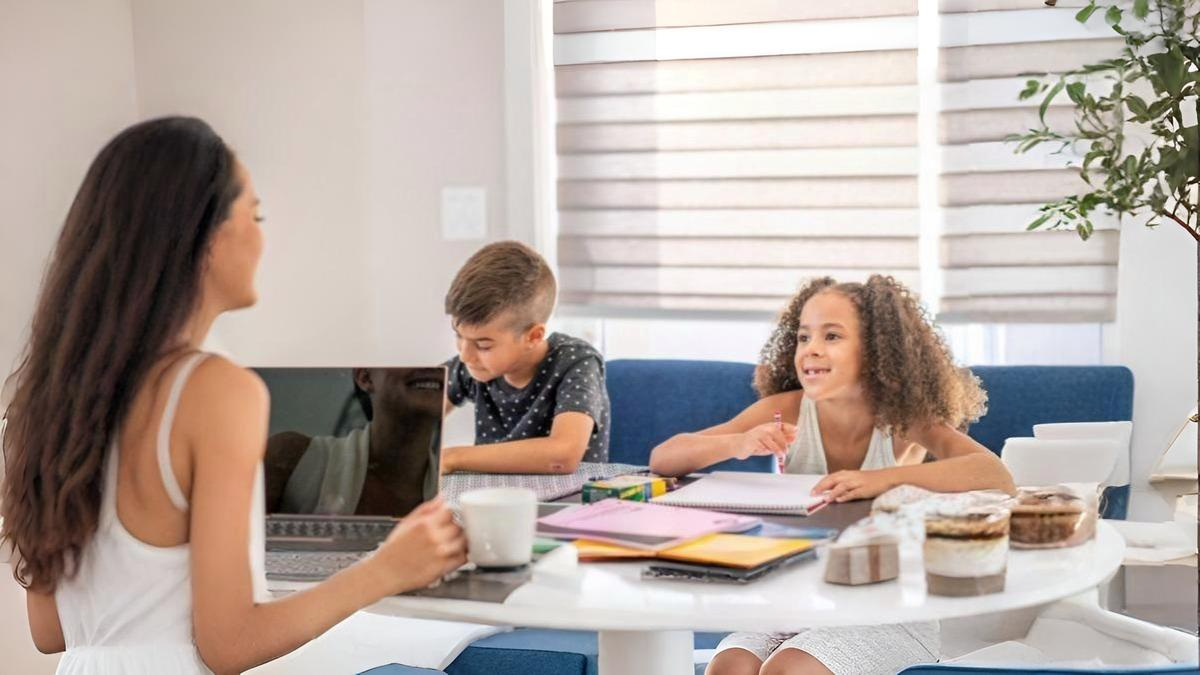
Homeschooling doesn’t have to feel like juggling a classroom, a craft store, and a library inside your living room. Yet for many moms, that’s exactly what it becomes: shelves stuffed with curriculum you “might use someday,” endless bins of manipulatives, rotating systems, baskets of half-used workbooks, and a house that’s always one bad day away from turning into a learning tornado.
Minimalist homeschooling is a breath of fresh air in a world that constantly pushes more curriculum, more extras, more activities, more “must-have” resources. What if your homeschool could be lighter? What if fewer materials actually created more learning? What if the secret to a peaceful day wasn’t adding things but removing them?
Minimalist homeschooling is not bare learning. It’s intentional learning. It’s choosing depth over quantity, clarity over chaos, and presence over pressure. It’s creating a home where your children thrive not because you do everything but because you do the things that actually matter.
And if you’re reading this because you’ve felt overwhelmed, overstimulated, or stretched thin, you’re not alone. Many families who explore minimalist homeschooling are seeking exactly what you’re seeking: peace, consistency, and a life that feels doable and joyful.
Let’s begin.
Table of Contents
This article contains affiliate links. If you purchase something I’ve recommended, I’ll earn a small commission at no extra cost to you. I really appreciate your support and I hope this guide helps you ♡
What Is Minimalist Homeschooling and What It’s Not
Minimalist homeschooling isn’t about cutting everything until your home feels empty or cold. It’s not about perfection, aesthetic minimalism, curated shelves, or matching baskets (though those can be nice).
Minimalist homeschooling is:
choosing what actually works
removing what doesn’t support your child
simplifying your materials
creating predictable, calm routines
freeing yourself from guilt-driven buying
focusing on connection and learning, not clutter
It’s a practical and emotionally freeing approach to homeschooling especially for moms who feel overstimulated by too many choices or drained by constant decision-making.
Minimalist homeschooling is not deprivation. It’s liberation.
Why Minimalist Homeschooling Works
Children thrive when they are not overwhelmed. Research on child development shows that simplified learning environments can support better focus, emotional regulation, and deeper engagement in children. Many kids, especially those with sensitive nervous systems focus better, learn deeper, and settle emotionally when they have fewer choices and a calmer environment.
Minimalist homeschooling reduces:
visual clutter
decision fatigue
impulsive curriculum switching
unrealistic expectations
mom guilt
overstimulation
And it increases:
consistency
independence
creativity
attention span
peaceful routines
If you’ve ever felt like your homeschool is “too much,” simplifying might be the path to everything you’ve been trying to create.
The Heart of Minimalist Homeschooling: Do Less, But Do It Well
Instead of juggling six subjects a day, a minimalist homeschool focuses on three core areas:
When these three foundations are strong, everything else fits naturally into your weeks, seasons, and rhythms. The beauty of homeschooling is that “school” doesn’t have to look like 6–8 subjects every day. Children learn through life, curiosity, conversations, questions, and experiences, not just textbooks.
Minimalism brings that truth forward.
Step One: Declutter Your Homeschool Supplies
Before you plan anything, simplify your materials. A minimalist environment creates a calmer brain for you and your child.
Start with gentle decluttering:
Remove broken, incomplete, or unused supplies.
Donate a curriculum that overwhelmed you.
Keep only what you actually reach for weekly.
Store extras out of sight until you need them.
Imagine a single shelf or cabinet where everything has a home. Imagine your mornings without digging through piles or searching for missing books.
Minimalism is not about owning less, it’s about owning the right things.
Step Two: Choose a Simple Curriculum that Matches Your Reality
Minimalist homeschooling pairs beautifully with curriculum that is:
open-and-go
not parent-intensive
consistent and predictable
not overloaded with extras
easy to adapt
You don’t need complicated teacher manuals, heavy lesson plans, or long assignments to give your child a quality education. You need clarity, connection, and consistency.
If you’re unsure what kind of curriculum fits your personality and your child’s learning style, you may enjoy reading Homeschooling Children With Learning Differences, especially if your child thrives with hands-on or simple instruction.
Minimalism is most powerful when it supports your actual life, not someone else’s Instagram routine.
Want help creating a minimalist homeschool plan that fits your family?
Step Three: Build a Calm, Predictable Daily Rhythm
Minimalist homeschooling thrives on rhythms, not rigid schedules. A rhythm gives your home structure without stress.
A simple rhythm might look like:
slow morning wake-up
breakfast + connection
reading together
math lessons
outdoor time or nature walk
creative activity or simple enrichment
quiet time
free play
This rhythm fits toddlers, elementary learners, and multi-age families beautifully. It’s flexible enough to adapt, yet consistent enough to reduce overwhelm.
And if mornings tend to be your hardest time, revisit the warm strategies in Homeschool Morning Routines That Actually Work. A minimalist routine keeps your brain quiet and your day grounded.
Step Four: Use Fewer Materials, But Use Them More Creatively
Minimalist homeschooling doesn’t mean removing creativity, it means simplifying the tools creativity flows through.
A few high-quality items can replace shelves of unused supplies.
For example:
A small set of art materials replaces stacks of kits.
One or two math manipulatives replace dozens of sets.
A nature journal replaces multiple science books.
Good read-alouds replace endless worksheets.
Outdoor play replaces structured PE.
Children naturally flourish when they’re not overstimulated with choices.
Step Five: Make Nature a Core Part of Your Homeschool
Nature is the ultimate minimalist classroom: free, calming, sensory-rich, and endlessly educational.
You don’t need a forest or special equipment. Your backyard, porch, neighborhood, or local park is more than enough.
Nature simplifies everything from sensory regulation to emotional grounding to curiosity.
Step Six: Say Yes to Slow Learning
Minimalist homeschooling invites you to slow down and deepen learning instead of rushing through content.
Slow learning looks like:
reading one great book deeply instead of 12 quickly
spending a whole week on a single concept
letting curiosity lead the way
exploring ideas through discussion, drawing, or nature
learning through life, not constant assignments
Slower learning is richer learning.
Step Seven: Reduce the Emotional Load on Yourself
Minimalism isn’t just physical, it’s emotional.
Your load becomes lighter when you:
stop comparing your homeschool to others
stop switching curriculum constantly
stop believing more is better
stop feeling pressured to do every subject daily
stop pushing yourself into burnout
Minimalist homeschooling is deeply connected to emotional well-being. If you haven’t read it yet, Homeschool Burnout for Moms pairs beautifully with this philosophy. Simplifying is one of the strongest antidotes to burnout.
Step Eight: Use Connection as Your Best Teaching Tool
Minimalist homeschooling isn’t about materials, it’s about relationships.
Children learn best when they feel seen, heard, and supported. Connection fuels curiosity. Curiosity fuels learning.
Simple acts build connection:
reading together
morning cuddles
working side-by-side at the table
talking during nature walks
cooking or baking together
quiet afternoons with books
Minimalism gives you the mental space to be present.
Step Nine: Embrace “Enoughness”
Minimalist homeschooling works because it teaches you to recognize what is enough enough learning, enough resources, enough progress, enough effort.
Your child doesn’t need 10 extracurriculars. Your shelf doesn’t need 40 workbooks. Your day doesn’t need 8 subjects. You don’t need to be a superhuman.
Enough is powerful. Enough is sustainable. Enough is peaceful.
Conclusion
Minimalist homeschooling isn’t about stripping your home bare it’s about building a homeschool that feels calm, centered, and deeply supportive for your whole family. It’s about clarity instead of chaos, connection instead of clutter, and intention instead of overwhelm.
When you simplify your materials, choose calm routines, lean into nature, and slow down your learning pace, home becomes a peaceful environment, a space where your children thrive because the pressure is gone, not in spite of it.
You don’t need more to homeschool well. You need what truly matters. Minimalist homeschooling is your invitation to breathe, simplify, and find joy in the small, meaningful moments that shape your days.